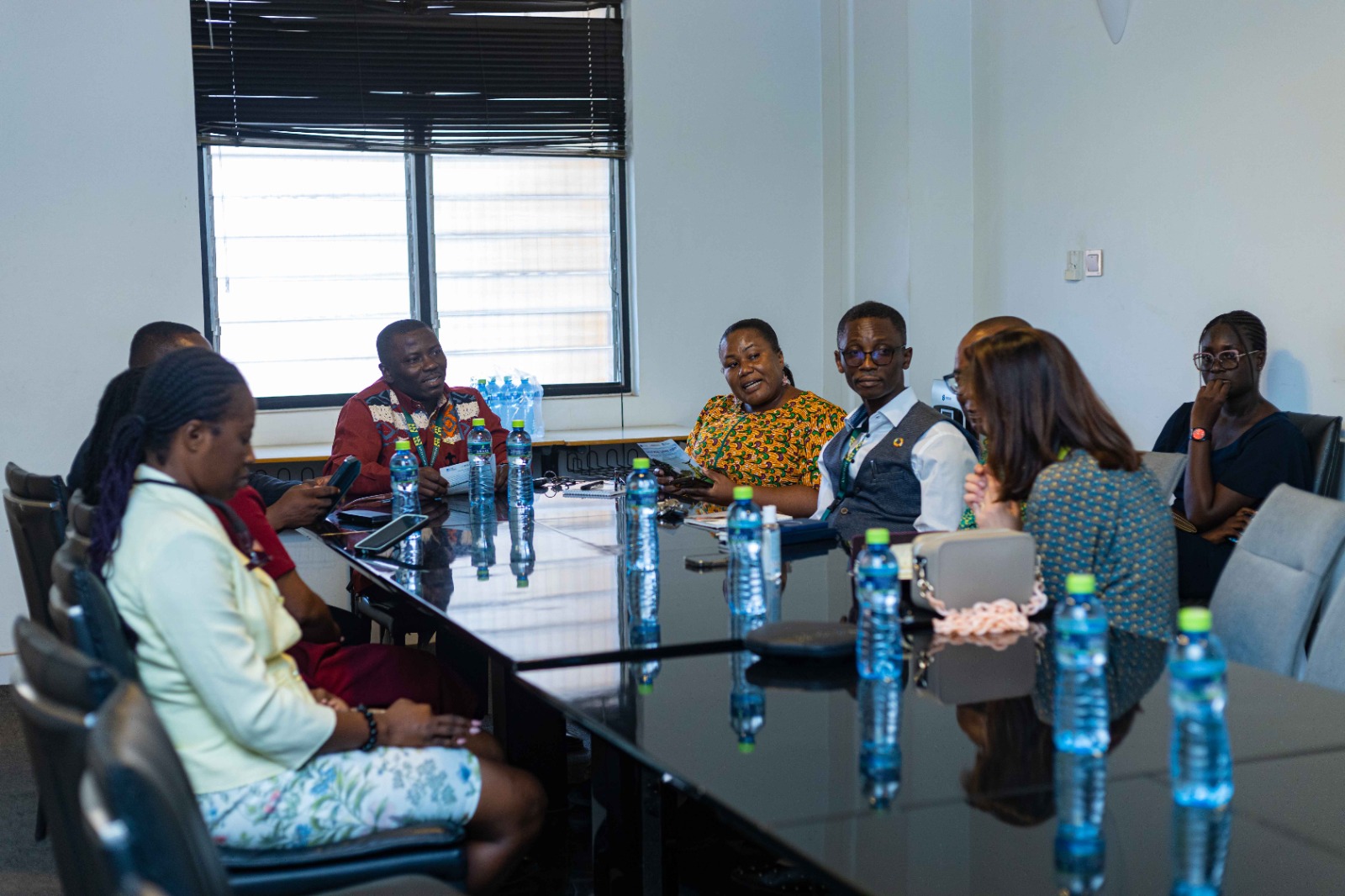
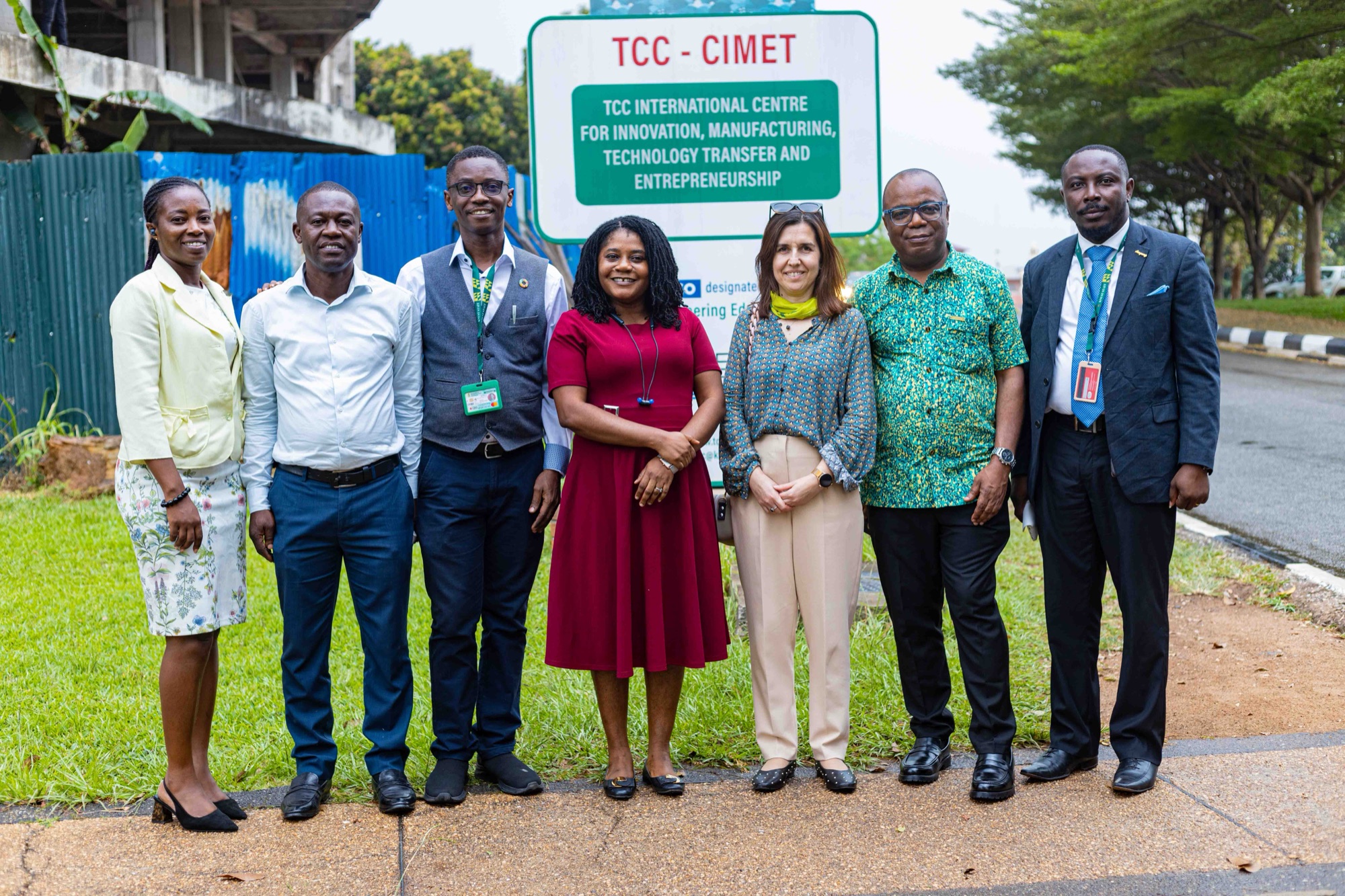
BUCABUMA Project Team Pays Courtesy Call on KNUST Vice-Chancellor
The BUCABUMA Project team briefed KNUST's Vice-Chancellor on progress following a monitoring and evaluation visit by EACEA.
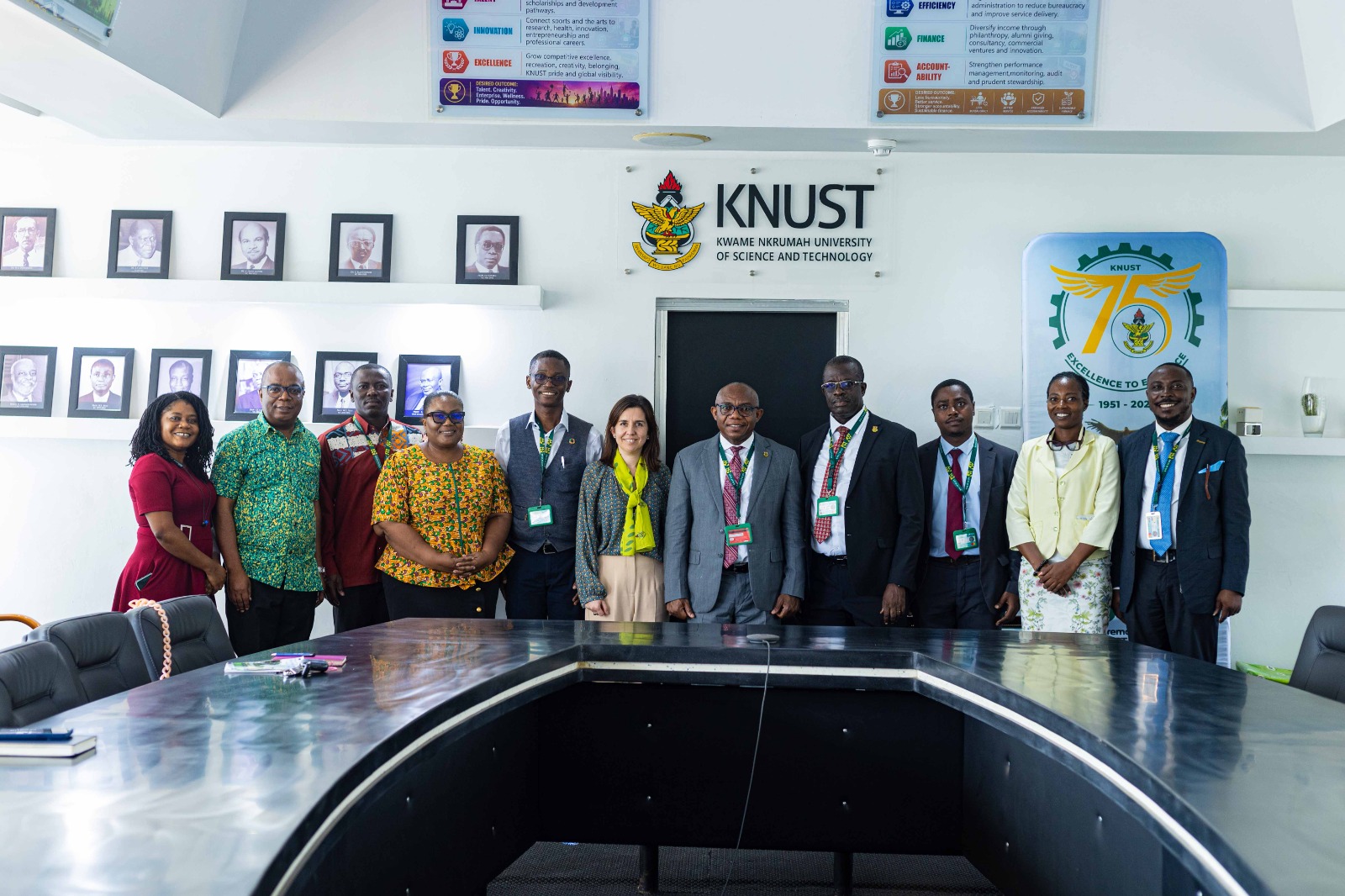
The BUCABUMA Project team has paid a courtesy call on the Vice-Chancellor of the Kwame Nkrumah University of Science and Technology (KNUST), Kumasi, following a monitoring and evaluation visit by the European Education and Culture Executive Agency (EACEA).
The courtesy call provided an opportunity to brief the Vice-Chancellor on the project’s implementation, progress and key outcomes, as well as highlight its contribution to strengthening institutional capacity and promoting sustainable building materials.
Speaking at the meeting, Ms. Elif Memis Marsman, Monitoring and Evaluation Officer at EACEA, under the Intra-Africa Academic Mobility Scheme, observed that the management and the entire university had embraced the project, which she noted was not the case for others.
“This is a classical visit we always do, based on the number of projects in a country. We go and visit the institutions managing the projects, and indeed, meeting the senior managers as well to get their opinion about how the projects are going, how they see the added value of being in an Intra-Africa Academic Mobility Scheme project.
“And in some cases, we have the university management aware of the project, but not all departments of the university support the project implementation, but this is not what I see now in KNUST. It’s very good, very good news,” she said.
She also explained the project as a tool to make African universities attractive and facilitate brain circulation in Africa.
“The projects are not only financing mobility and scholarship holders, but they are also a tool for increasing the regional integration in higher education in Africa, contributing to quality of higher education, and thereby to the attractiveness of African universities in the world.
“Another important point is that the mobility of students between different universities, mobility of training, is a new component for the employability of the scholarship holders and academic and administrative staff. It contributes to brain circulation inside Africa. So, learning from each other, learning from different systems, different education systems, different teaching methods, and feeding each other’s academic curricula for further improvements,” she explained.
The BUCABUMA Project is a European Union-funded initiative led by the TCC International Centre for Innovation, Manufacturing, Technology Transfer and Entrepreneurship (TCC-CIMET) at KNUST under the leadership of Prof. Francis Davis, with support from the European Education and Culture Executive Agency (EACEA). The project explores the potential of natural materials in advancing the transition towards circular and low-carbon economies, with a focus on strengthening knowledge and capacity in sustainable building materials.
The Vice-Chancellor of KNUST, Prof. Christian Agyare, explained the importance of South-South mobility and its relevance in problem solving.
“Now, the emphasis on the South-South, which is good, is for us to work together and, I would say, experience each other’s institutional programs and relationships so that we can come together and solve our issues, which are usually common to the Southern parties. So, I think it’s good that you have found it necessary to undertake such a project.
“I believe our students are living up to expectations. The key thing is how we translate the experiences and knowledge we gain through the exchange into the local environment, among our colleagues, through our interactions with students, and even among staff. I think that is what some of these exchange programs are supposed to do,” he said.
He also called for the collaboration to be extended to include research activities, noting that this would further enrich students’ learning experiences and strengthen the academic benefits of the partnership.
“So, we are very grateful for your presence, and I believe that, with the feedback you are going to give to the sponsors, we will be able to explore other areas, including not only student mobility but also research collaboration among the Southern partners. I think it is something we can also extend this funding to support. If you can enhance our research collaboration, obviously, it will positively affect the students’ learning outcomes and experiences.
“So, it is a special appeal that I am making. If this can also be extended, I will be grateful. Whatever form of support the University is expected to provide will be made available,” he said.
The project brings together a consortium of academic and research institutions from Africa and Europe, including KNUST (Ghana), the University of Nairobi (Kenya), Addis Ababa University College of Technology and Built Environment (Ethiopia), the University of the Witwatersrand (South Africa) and the Karlsruhe Institute of Technology (Germany). The CSIR-Building and Road Research Institute (CSIR-BRRI), Ghana, serves as an Associate Partner.
Project Coordinator, Prof. Alexander Boakye Marful, disclosed that an earlier engagement with the International Programme Office (IPO) had highlighted Seychelles as a potential strategic partner for future applications under the Intra-Africa Academic Mobility Scheme.
“When we visited the IPO, we were informed that Seychelles is one of the strategic partners that is not yet part of the Intra-Africa Academic Mobility Programme. We were therefore encouraged to consider a partnership with them if we decide to pursue another grant in this area. We have taken note of this and will work towards exploring the opportunity,” he said.