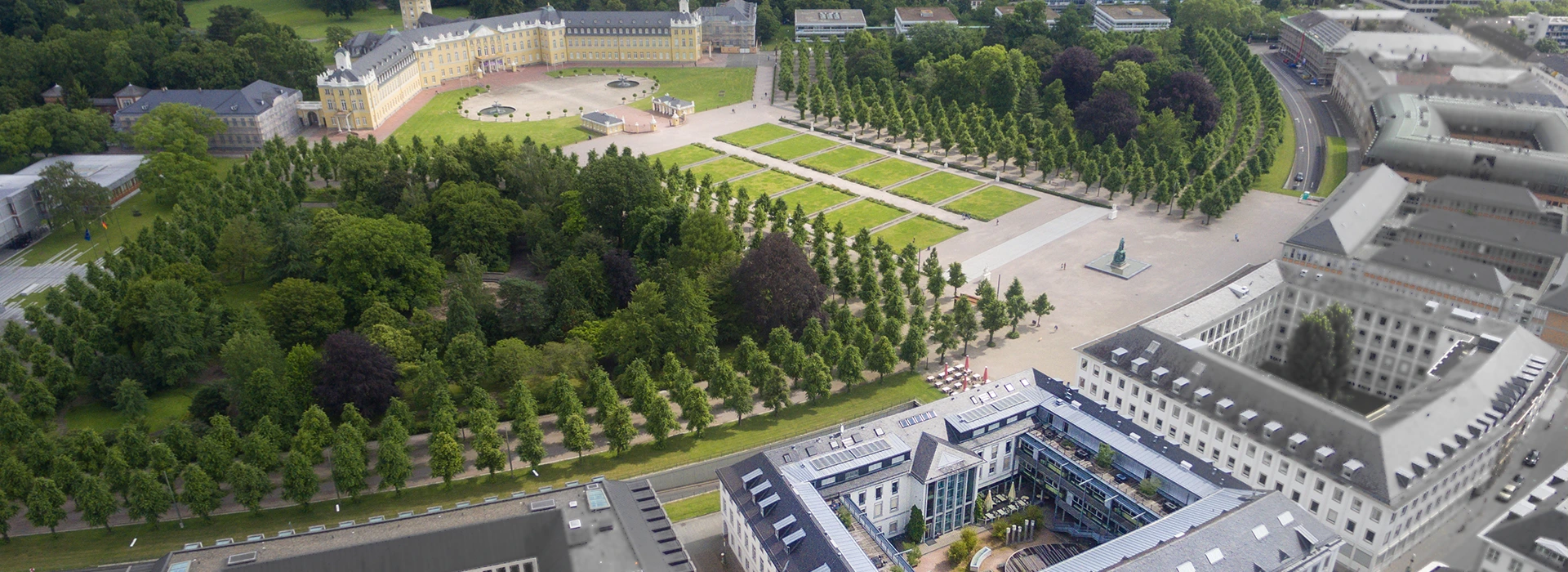
Karlsruhe Institute of Technology
Karlsruhe, Germany — computational design, robotic fabrication, and circular natural material systems for the BUCABUMA network.

KIT
Professorship Digital Design and Fabrication — KIT Department of ArchitectureBUCABUMA programme academic lead
The Professorship Digital Design and Fabrication (DDF) at Karlsruhe Institute of Technology explores computational design and digital fabrication as drivers of circular construction. Led by Prof. Moritz Dörstelmann within KIT's Institute for Building Design and Technology, DDF develops material systems at full scale, tests them through demonstrators, and links research-based teaching with applied construction experiments. For BUCABUMA, this makes DDF a natural academic anchor for frugal digital methods, circular natural building materials, and practical knowledge transfer across partner institutions.
Partner Profile
About DDF at KIT
DDF works at the intersection of architecture, material research, computational design, robotic production, and construction practice. Its research investigates how circular building systems can be designed, fabricated, assembled, reconfigured, disassembled, and recycled through an integrated digital process. Instead of treating digital fabrication as a purely technical tool, DDF uses it to open new architectural possibilities for renewable, reclaimed, and locally available materials.
The chair's work is developed through 1:1 prototypes, funded research projects, teaching studios, and public demonstrators. Recent projects such as RENABUMA, ReSidence, ReFrame, ReGrow Willow, UPwood, and Gradientenlehm show a clear research agenda: combine low-carbon natural materials with computational workflows, adapt digital methods to real construction constraints, and make circularity visible through buildings that can be reused, repaired, relocated, or returned to material cycles.
Programme Relationship
KIT's Role in BUCABUMA
DDF's role is especially relevant because BUCABUMA is not only about material substitution. The programme asks how traditional building knowledge, local resource streams, and accessible digital tools can work together in African construction contexts. DDF's research on CAD-to-craft workflows, projection-based assembly guidance, robotic fabrication, adaptive material placement, and full-scale testing provides a practical foundation for that question.
The clearest example is RENABUMA, a DDF design-build research project with KNUST in Kumasi. It explores bamboo-earth hybrid construction through frugal digital methods, including simplified planning and projected assembly instructions that support precise construction while remaining compatible with manual craftsmanship. This approach mirrors BUCABUMA's broader mission: scalable, low-carbon, locally adapted construction systems shaped through intercultural teaching, research, and exchange.
Expertise & Alignment
Focus Areas Relevant to BUCABUMA
DDF's work aligns with BUCABUMA through a focused set of digital circular construction capabilities:
Computational Design for Circular Systems
DDF develops digital workflows that connect architectural design, material behaviour, structural performance, fabrication logic, assembly, reuse, and end-of-life planning.
Frugal Digital Construction
Projects such as RENABUMA translate digital design into accessible construction guidance, pairing bamboo-earth systems with projection-based instructions and locally grounded craft knowledge.
Robotic Fabrication with Natural Materials
DDF investigates robotic and digitally controlled processes for variable plant-based and mineral materials, including willow, flax, earth, timber, and reclaimed wood.
Full-Scale Research Demonstrators
Built prototypes such as ReSidence, ReFrame, ReGrow Willow, and RENABUMA test circular construction ideas at 1:1 scale rather than leaving them as drawings or lab samples.
Earth, Bamboo, Willow & Timber Systems
DDF's demonstrators explore how fast-regrowing or abundant materials can be combined into load-bearing, reusable, low-emission building components.
Reclaimed Material Upcycling
ReFrame and UPwood show how reclaimed and residual wood can become high-value structural components through scanning, computational matching, robotic processing, and circular detailing.
Research-Based Teaching
DDF embeds experimental construction in bachelor and master formats, giving students direct experience with design-build research, digital methods, and circular material systems.
Digital Circular Construction Research Lab
The 900-square-meter DDF Research Lab provides space and robotic infrastructure for testing materials, components, and construction systems under realistic full-scale conditions.
Who to Contact
Contact Persons
For BUCABUMA programme enquiries at KIT, contact the relevant coordinator listed below. Academic enquiries related to KIT's contribution should be directed through the Professorship Digital Design and Fabrication as the coordinating DDF unit.

Apply to the BUCABUMA Programme
KIT is a technical partner in BUCABUMA and does not host full-time PhD students, students, or trainees. All applications are submitted through the BUCABUMA digital portal. Applicants are encouraged to review DDF's research demonstrators, funded projects, and teaching activities to see how digital circular construction connects with the programme's research themes.