Sir David Adjaye’s Lecture Reflects Vision Behind KNUST’s BUCABUMA Project
Globally acclaimed architect Sir David Adjaye has called on African architects to embrace scarcity, local knowledge systems, and indigenous materials as drivers of innovation in architecture and sustainable development.
Globally acclaimed architect Sir David Adjaye has called on African architects to embrace scarcity, local knowledge systems, and indigenous materials as drivers of innovation in architecture and sustainable development.
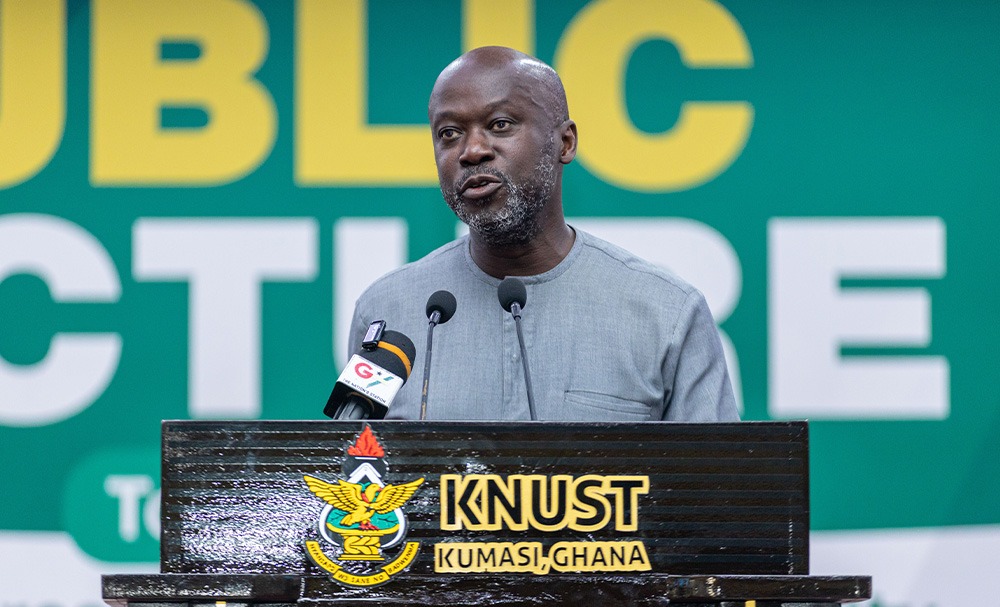
Speaking during a public lecture organised by the College of Art and Built Environment (CABE) at the Kwame Nkrumah University of Science and Technology (KNUST), Sir David Adjaye challenged the notion that poverty and material limitations are barriers to creativity.
“The poverty that we have is not a hindrance. It’s an opportunity to think differently,” he said.
According to him, scarcity can create the conditions for radical innovation and originality in architecture and design.
“We cannot say that scarcity is a problem. It’s not an argument. In fact, scarcity is an opportunity,” he stated.
Sir David Adjaye also urged African architects to stop waiting for validation through comparisons with Western systems and instead focus on developing architecture rooted in local realities and experiences.
“We have to create an architecture out of what we have,” he said.
During the lecture, he projected several of his rammed-earth architectural projects to demonstrate how traditional building methods and indigenous knowledge systems can inform contemporary architecture.
He further stressed the importance of reclaiming African knowledge systems and combining them with modern technologies to shape future development.
“We need to become the masters of our knowledge and then to use it with the technologies that exist in the world right now to imagine our futures,” he stated.
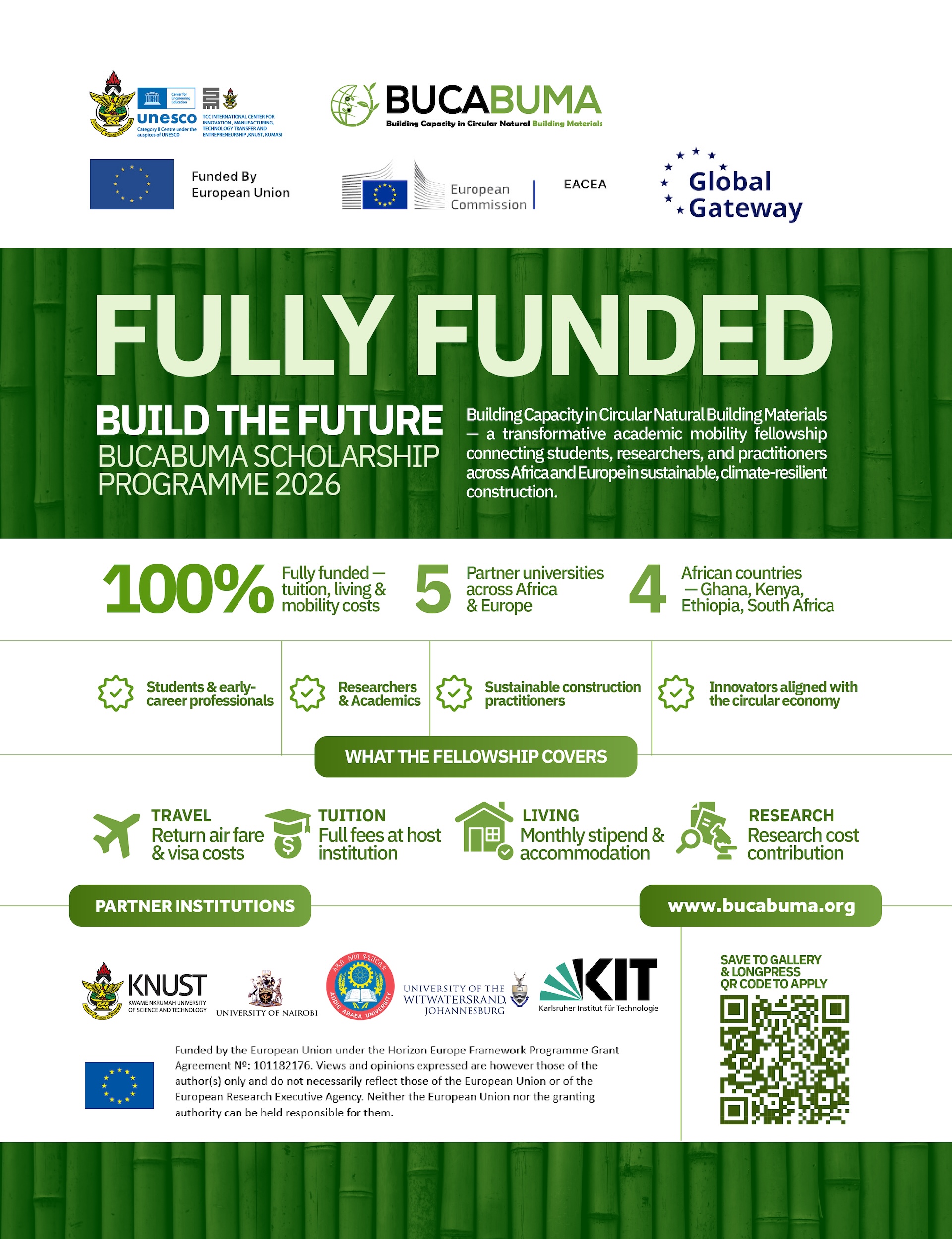
His remarks strongly align with ongoing research initiatives at KNUST, particularly the BUCABUMA project led by the TCC International Centre for Innovation, Manufacturing, Technology Transfer and Entrepreneurship (TCC-CIMET) under the leadership of the Director-General Prof. Francis Davis.
The BUCABUMA project is exploring how locally available earth materials and agricultural bio-waste can be transformed into sustainable construction materials through digital fabrication, circular economy principles, and advanced computational methods.
Researchers involved in the project are also looking forward to explore hybrid quantum-classical computational techniques to optimize laterite-clay composites reinforced with agricultural fibres such as coconut husk and palm-nut waste.
TCC-CIMET serves as the lead institution for the BUCABUMA project under the leadership of Prof. Alexander Boakye Marful. The project is funded by the European Education and Culture Executive Agency (EACEA) under the European Commission.
The international consortium includes the University of Nairobi in Kenya, Addis Ababa University College of Technology and Built Environment in Ethiopia, the University of the Witwatersrand in South Africa, and the Karlsruhe Institute of Technology in Germany. The CSIR–Building and Road Research Institute (BRRI) in Ghana also serves as an Associate Partner.
Together, the partners are advancing research, innovation, and skills development while promoting sustainable construction practices and climate-responsive building solutions across Africa and beyond.
Sir David Adjaye’s lecture reinforced growing conversations within African architecture and engineering about the need to combine indigenous knowledge, local materials, and emerging technologies to develop sustainable and climate-responsive solutions for the continent’s future.